
Trace Software
Blog

What are the benefits of a C&I solar project for a company?

Technical

12 January 2026

Summary

A well-designed C&I photovoltaic project enables companies to sustainably reduce their energy costs, secure their electricity budget in the face of price volatility, strengthen their environmental image and improve their operational resilience. Beyond the simple production of renewable energy, C&I solar is becoming a real strategic and financial lever for players in the tertiary and industrial sectors.

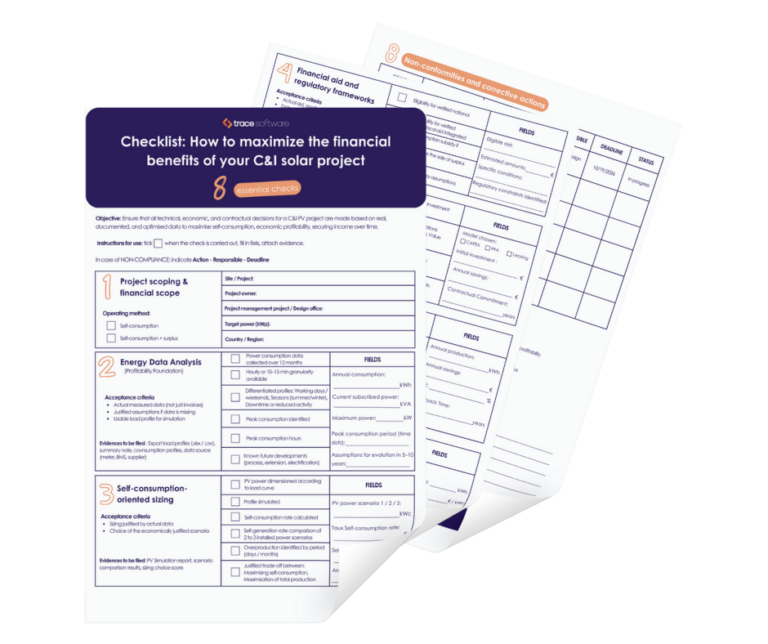
Download the PDF checklist!

8 essential points to maximise the financial benefits of your C&I solar project.

Download the checklist

Introduction

In the first article of this series, we defined what C&I photovoltaics is and identified the companies concerned by this fast-growing model. The second article then highlighted the major trends in C&I solar energy in Europe by 2025, between self-consumption, electrification of uses and grid constraints.

This third part now focuses on a central question for any decision-maker: what are the concrete advantages of a C&I solar project for a company?
Beyond concepts and trends, the aim here is to analyse the real, measurable and sustainable benefits that a photovoltaic project can bring financially, strategically and operationally.

Reduced energy costs and quick return on investment

The first advantage of a C&I solar project, and often the most decisive in the decision-making process, is the direct reduction of the electricity bill. By producing part of its energy locally, the company mechanically reduces its purchases from its supplier. Each kilowatt-hour self-consumed corresponds to one kilowatt-hour not purchased at the market price.

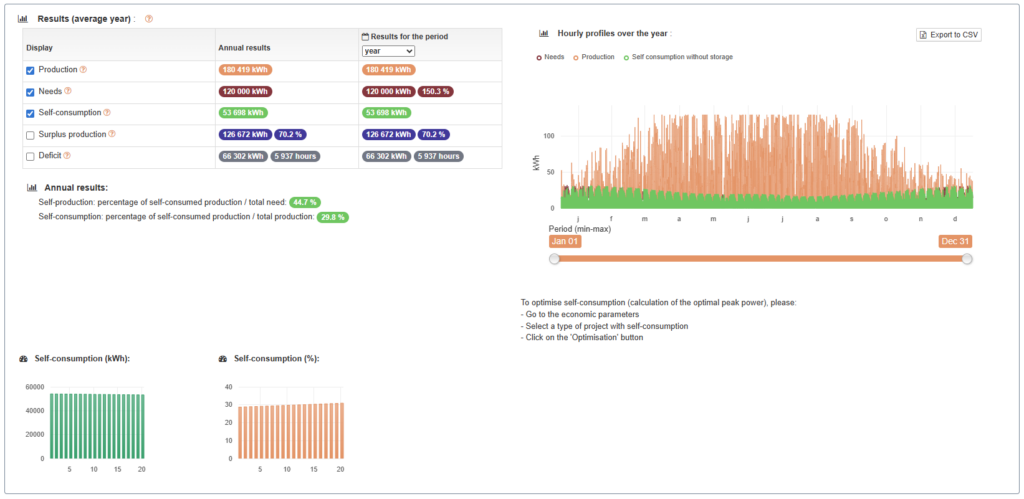
Over a year, these savings can become significant, especially for sites whose activity is mainly concentrated during the day. For example, when a photovoltaic installation covers 20 to 40% of the electricity needs of an industrial or tertiary site, these are all volumes of energy that are no longer subject to grid tariffs and taxes.

Self-consumption study on an industrial site
Self-consumption study on an industrial site in archelios PRO

However, this economic performance is based on a rigorous approach to the project. Producing part of your electricity on site and structuring your project correctly (particularly in the study, sizing and operation phases) is a key lever for controlling energy supply and production.

Beyond the immediate economy, C&I solar brings a structural financial advantage: securing the price of electricity in the long term. Once the initial investment has been made, the cost of producing a solar kilowatt-hour is known and stable, unlike the price of grid electricity, which is highly exposed to geopolitical tensions, energy policies and imbalances between supply and demand.

In a context of long-term volatility in energy prices, having photovoltaic production on site acts as a real budget insurance. The facilities commissioned today will continue to produce for 30 to 35 years (Royal Society of Chemistry, 2025), with limited operating costs. For finance departments, this helps smooth out energy expenses, improve long-term visibility, and reduce exposure to external risks.

Proven profitability over the lifetime of the installations

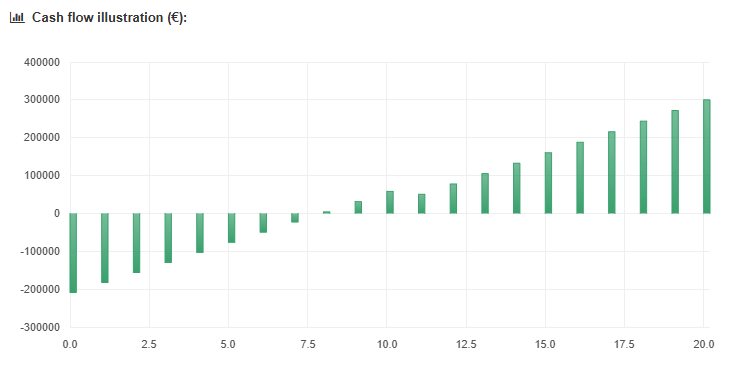
C&I photovoltaic projects generally have payback times of between 7 and 12 years, depending on several parameters: level of self-consumption, sunshine, cost of the project, price of electricity grid, available aid or recovery of the surplus.

In the most favourable configurations, particularly when self-consumption is high and aid schemes are mobilised, the amortisation can be achieved in about 5 years. For standard rooftop projects, the durations observed are between 8 and 12 years (IDEX, February 2025). More complex installations, such as car park canopies requiring civil works, can have longer returns on investment, while remaining consistent across the life of the equipment.

Cash flow analysis of an industrial rooftop project
Cash flow analysis of an industrial rooftop project in archelios PRO

It is important to remember that a photovoltaic panel maintains a high level of performance over several decades. Once the depreciation phase has passed, the company still benefits from fifteen to twenty years of electricity produced at a very low cost. This ability to generate long-term value makes C&I solar a particularly robust investment compared to other industrial projects.

Surplus recovery and optimisation of energy flows

In many projects, photovoltaic production can occasionally exceed the site’s instantaneous consumption. This surplus is not lost. It can be injected into the grid and be the subject of a buy-back contract, according to the mechanisms in force in each country.

In France, for example, excess electricity produced by installations up to 100 kWp can be sold under a guaranteed feed-in tariff over a long period. For eligible installations of 100 to 500 kWp, a one-stop shop requires competition, with the possibility of additional remuneration over 20 years. This recovery of the surplus generates additional income that improves the overall profitability of the project.

Even when the priority objective remains maximum self-consumption, the possibility of monetising the surplus reassures project leaders. Photovoltaics then becomes a productive energy asset, capable of generating both savings and revenue.

Results
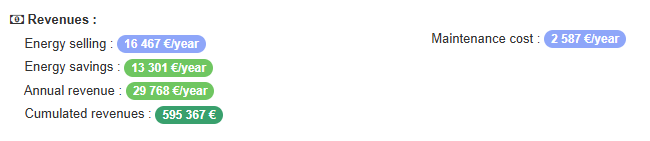
Results of the economic analysis of an industrial project
Results of the economic analysis of an industrial project in archelios PRO

Checklist premium à télécharger

Optimizing the profitability of a C&I photovoltaic project is based on a methodical and rigorous approach from the design phase.

Download the checklist

Financial aid that strengthens economic attractiveness

At the European level, the development of photovoltaics is identified as a key lever for competitiveness and energy security for companies. The European Commission underlines the strategic role of solar energy in the energy transition and the strengthening of the continent’s energy autonomy.

C&I solar projects benefit from financial incentives in many European countries to accelerate the energy transition of companies. These mechanisms can take the form of investment bonuses, feed-in tariffs or tax deductions.

By reducing the net cost of the project, these grants directly improve financial indicators and reduce payback periods. They make solar accessible to a greater number of companies, including those with limited investment capacity.

To take full advantage of this, a precise analysis of the local regulatory framework is essential from the study phase.

Enhancement of the brand image and reinforced CSR commitment

Beyond the financial aspects, a C&I solar project is a strong signal in terms of environmental commitment. Producing renewable electricity on its site immediately reduces indirect emissions related to the electricity purchased, and therefore improves the company’s carbon footprint.

This reduction in emissions meets the growing expectations of customers, partners and contractors, who are increasingly attentive to environmental criteria in their decisions.

The benefits are also internal. Employees are generally sensitive to concrete actions in favour of the energy transition. A photovoltaic project visible on site reinforces the sense of belonging and can become a factor of attractiveness for the recruitment and retention of talent.

Increased energy autonomy and operational resilience

Installing a photovoltaic power plant on your site also means partially regaining control of your energy supply. The company becomes a producer of part of its electricity and reduces its dependence on the vagaries of the grid and markets.

This relative autonomy improves resilience to energy tensions, shortage risks or locally available power constraints. For certain industrial activities, the ability to secure a minimum production can represent a major challenge for business continuity.

The analyses conducted by ENTSO-E highlight the growing importance of decentralised generation to strengthen the resilience of electricity grids and limit local constraints, particularly in a context of electrification of uses.

C&I solar also offers strategic flexibility. It can be combined with storage solutions, the electrification of new uses or the gradual expansion of production capacities according to the evolution of the activity.

Conclusion: A profitable, secure and virtuous investment for companies

By combining financial savings, energy stability, environmental enhancement and operational resilience, C&I photovoltaics is a global investment, consistent with the current challenges of companies.

Properly designed and properly sized, a C&I solar project is more than just generating electricity. It is becoming a strategic lever for competitiveness, sustainable performance and energy risk management.

The key lies in a rigorous approach from the study phase, supported by reliable simulation tools and a detailed understanding of energy uses. It is on this condition that C&I solar reveals its full potential.

interface logiciel archelios PRO

Discover the solution

archelios-pro-light 1

DiscoverContact us

This article was written by: